
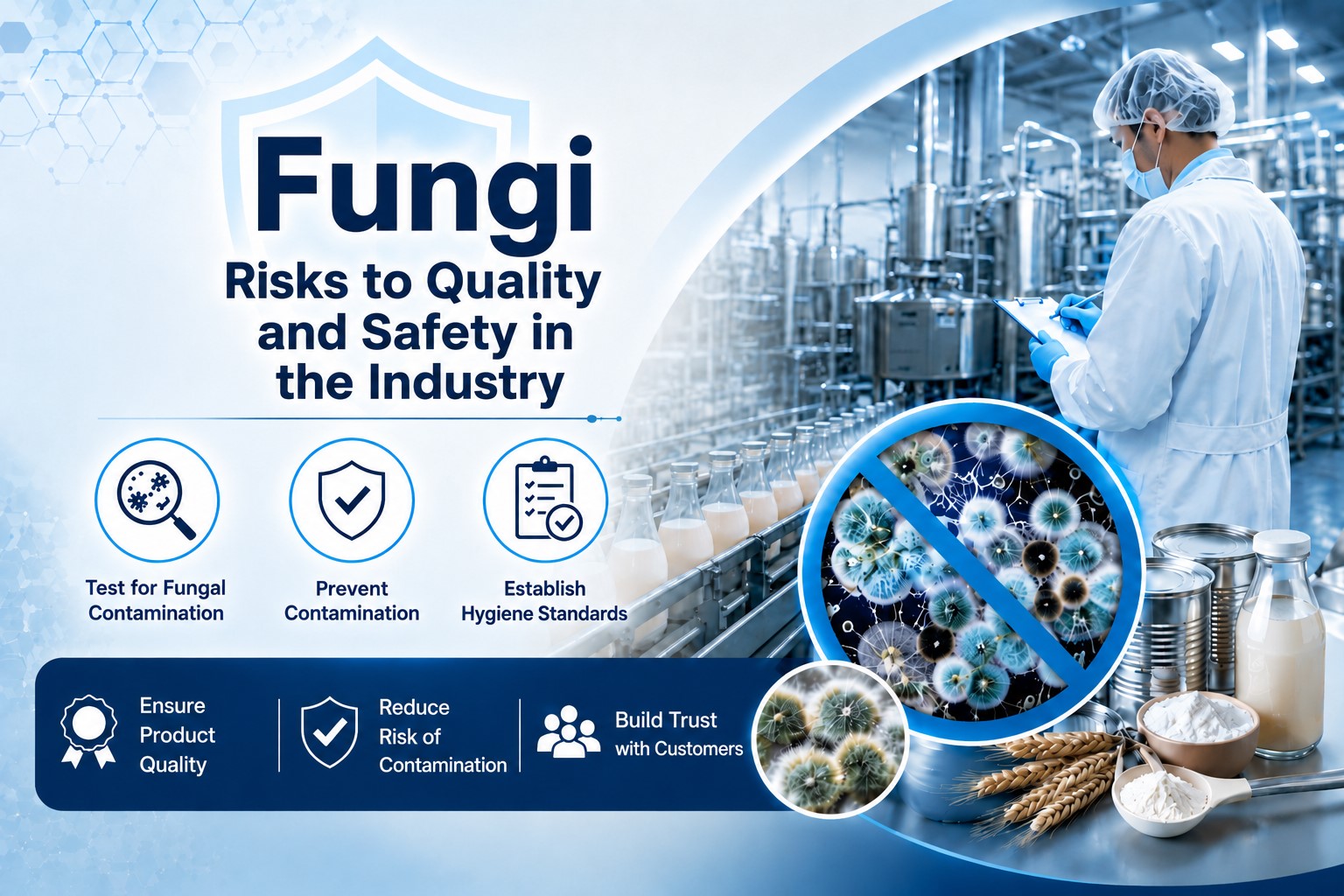
In the manufacturing industry, particularly in the food and beverage sector, fungal contamination can affect product quality and safety. It can shorten product shelf life, cause economic losses, and, in some cases, produce mycotoxins, which are harmful to consumers. Therefore, it is essential for manufacturers to place importance on controlling and preventing fungal contamination throughout every stage of the production process.
Although fungi are naturally present in the environment and cannot be completely avoided, the associated risks can be controlled through good hygiene management. Proper cleaning and disinfection are therefore essential for preventing contamination, maintaining product quality and safety, and building consumer confidence.
To ensure effective microbial control, an important factor is the selection of an appropriate disinfectant. The selection should take into consideration the type of microorganisms, surface, method of application, concentration, and contact time, as well as compliance with the manufacturer’s instructions and hygiene requirements of each industry.
MDT-Plus 5 is a disinfectant product for industrial applications, containing Peracetic Acid (PAA) as the active ingredient, which is an effective disinfectant for controlling a wide range of microorganisms.
With the properties of PAA, MDT-Plus 5 can be applied as part of a plant sanitation system, such as:
MDT-Plus 5 is therefore another option for operators seeking to enhance hygiene and microbial control systems in the production process, helping to reduce the risk of contamination, maintain product quality, and establish systematic cleanliness and safety standards throughout the production process.